After a full day, what can you make for dinner without turning the kitchen into another job? These chicken recipes offer 25 practical ideas for weeknights, from skillet and air fryer meals to oven dinners, soups, casseroles, and plates built around rice, pasta, or salad. You can choose a familiar dish or try a different flavor without starting from scratch. Recipes Chicken: 25 Easy Dinners
Spatchcock means removing a whole chicken’s backbone and flattening the bird before cooking. Hands-on effort and total cooking time vary with the cut and cooking method, so a quick skillet meal and a wholebird roast call for different plans. Start with skillet dinners if you want familiar ingredients and quick hands-on cooking.Key Takeaways Recipes Chicken: 25 Easy Dinners
- Choose a cooking method that fits the time and attention you have tonight.
- Match the cut to the texture and cooking effort you prefer.
- Use a food thermometer to check that chicken is fully cooked.
- Cooked, shredded chicken can shorten prep for soups and casseroles.
- Prepare vegetables and seasonings ahead to make the evening easier.
- Refrigerate cooked portions promptly so they remain safe to eat.
Recipes Chicken: Which Easy Dinners Fit a Busy Weeknight?
A skillet dinner lets you cook the main dish and its sauce in one pan, making it a practical fit for a busy weeknight. These chicken recipes suit evenings when you can stay near the stove but want familiar ingredients and a fast route to dinner.
Give chicken room in the pan so it browns instead of steaming. Cook in batches when the pieces crowd each other, then return them to the pan to finish with the sauce or vegetables.
Give chicken room in the pan so it browns instead of steaming. Cook in batches when the pieces crowd each other.Pick a recipe based on the cut and the amount of attention you can spare. A skillet works well when you want to build flavor in the same pan, but pieces of different sizes may finish at different times.
- Pan-seared chicken breast with pan sauce: Season even-thickness pieces, sear until golden, and use the browned bits in the pan for a simple sauce. Keep the breast from overcooking while the sauce comes together.
- Garlic-butter chicken bites: Cut chicken into small pieces, then season with garlic, butter, and spices. The bites can be ready in 15 minutes, so prep the ingredients before heating the pan.
- Chicken broccoli skillet: Cook chicken pieces with broccoli and a savory sauce. Add a splash of broth if the pan needs moisture, and cover briefly to soften the vegetables.
- Chicken fajita skillet: Slice chicken with bell peppers and onion, then season with fajita spices. Cut the vegetables evenly so they cook at a similar pace.
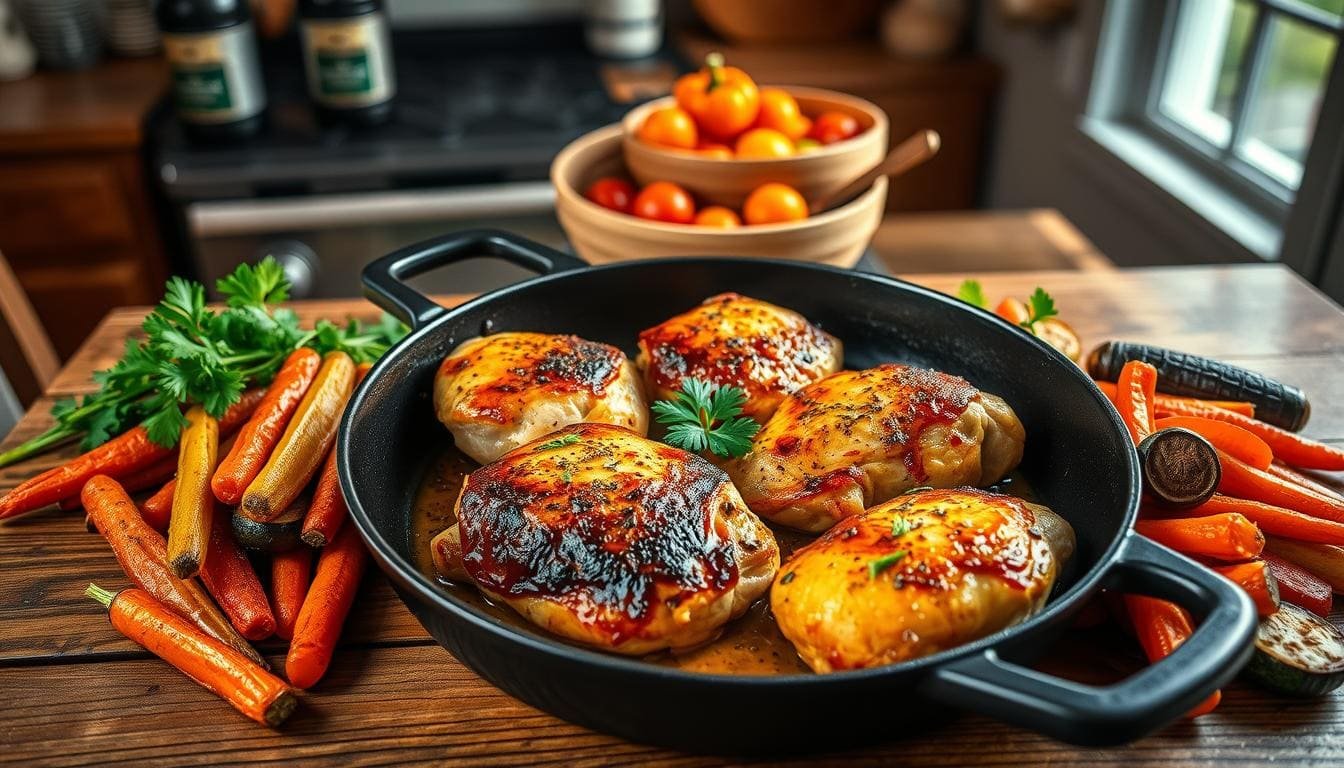
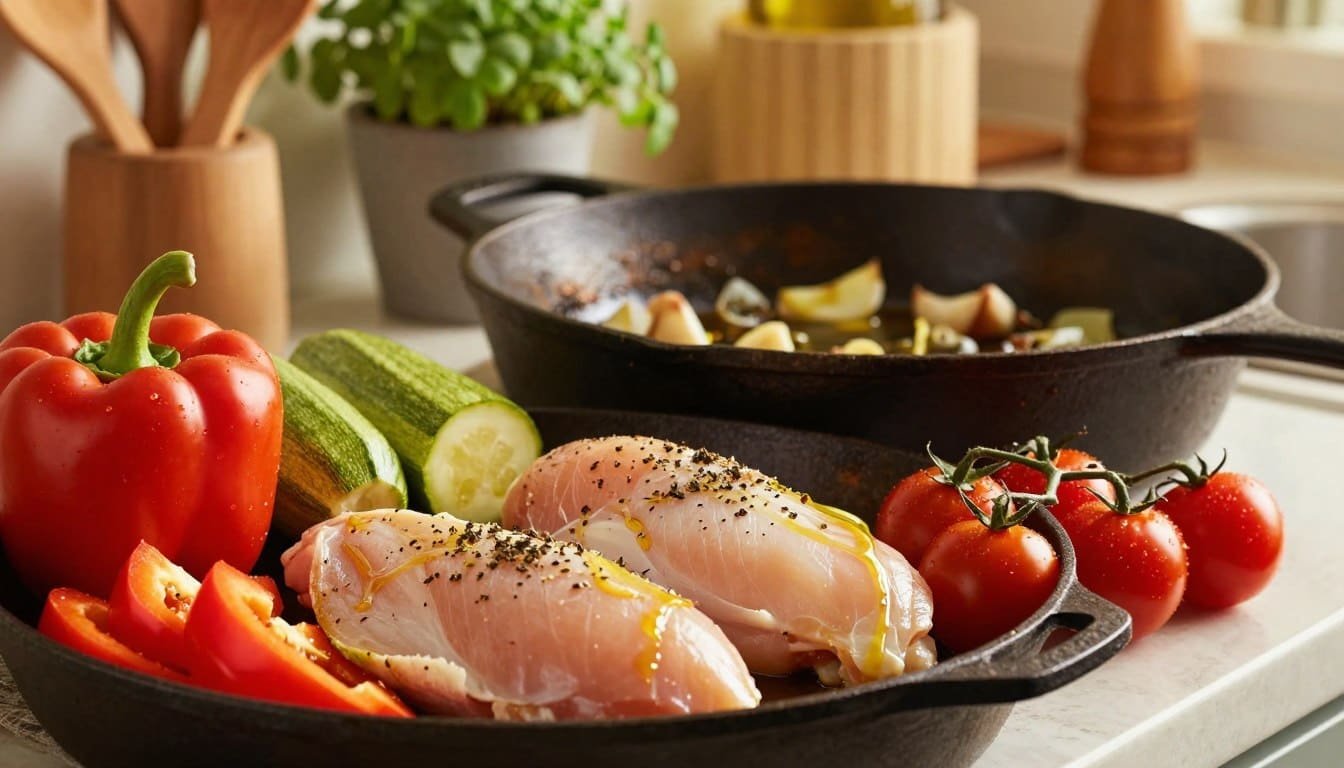
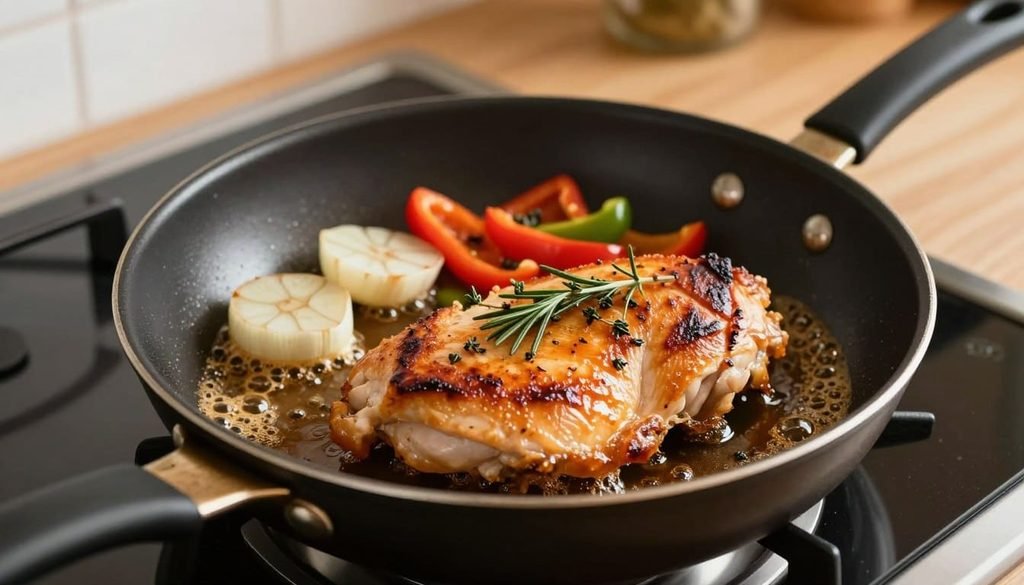
- Cast-iron chicken thighs: Put seasoned chicken thighs skin-side down in a hot cast-iron pan to crisp the skin. Turn as needed and check the thickest part before serving.
- Recipes Chicken: 25 Easy Dinners
Chicken breast cooks quickly but can lose moisture if you leave it over the heat. Chicken thighs bring a richer texture, while broccoli or peppers make the skillet a more complete meal. For crisp results with less stovetop attention, consider the air fryer options.
Which Chicken Dinners Work in an Air Fryer?
An air fryer is useful when a crisp exterior and a small batch matter most. Air fryer chicken works well for quick dinners, though the basket’s airflow needs space around each piece.
Do not crowd the basket: airflow helps the surface crisp. Batch size and cut thickness affect cooking time, so check pieces for doneness rather than expecting every load to finish on the same schedule.Choose a cut that fits the basket without overlapping. A compact fryer chicken meal can be convenient for one or two people, but larger appetites may need several batches or another method.
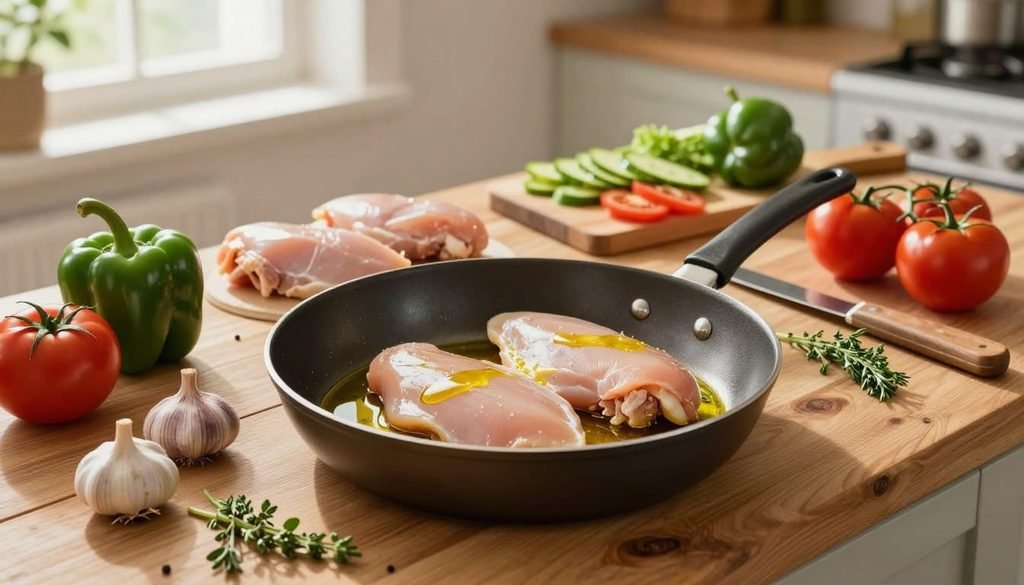
- Air fryer chicken breast: Season a boneless breast with oil and spices. If it is especially thick, flatten it to an even size so the thinner end does not dry out first.
- Air fryer chicken thighs: Use boneless thighs for a quick-cooking portion or bone-in thighs when you have more time. Arrange them in one layer with space around each piece.
- Air fryer chicken tenders: Coat tenders lightly with oil and seasoning, then turn them during cooking if your appliance calls for it. Their slim shape makes them handy for a quick meal.
- Air fryer chicken Parmesan bites: Coat bite-size pieces with breadcrumbs and Parmesan. Serve with marinara, or add the sauce near the end so the crust does not go soggy.
- Air fryer chicken drumsticks: Season the skin well and turn the drumsticks as needed. Leave room between them, especially when cooking a larger size.
- Recipes Chicken: 25 Easy Dinners
For easy chicken with a crunchy coating, tenders and Parmesan bites are natural choices. A whole basket of crowded pieces will not cook like a loose single layer, so work in batches when needed. A larger portion or hands-off roasting may suit an oven dinner better.
What Are Easy Oven-Baked Chicken Dinners?
The oven is a good fit when dinner can cook while you prepare the rest of the meal. It handles single-pan dinners and larger portions without requiring constant stirring, making it a useful choice on a full evening.
Do not assume every cut on a crowded sheet pan will finish at the same time. Size, thickness, and bone affect cooking, so check each piece instead of pulling the whole pan when the smallest item looks done.
Baking also gives you room to make dinner for several people at once. Use a pan large enough to leave space between pieces, and arrange vegetables so they can roast instead of steaming in a pile.
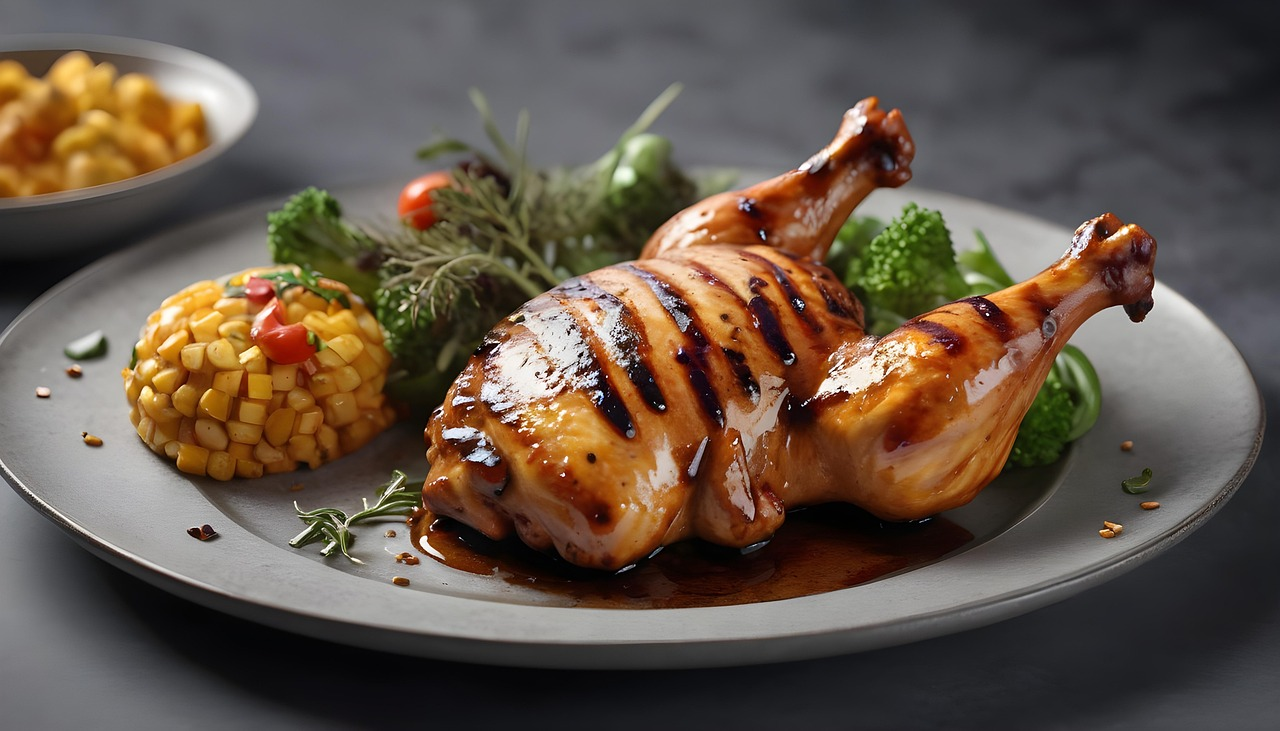
- Baked chicken leg quarters: Season the skin and roast until the thickest areas are cooked through. Leg quarters bring both the thigh and drumstick to the plate in one portion.
- Juicy baked chicken breast: Brush with olive oil and use a simple seasoning blend. Choose pieces of similar thickness and avoid leaving them in the oven after they are done.
- Spatchcock roast chicken: Flattening the whole bird helps it cook faster than roasting it whole without flattening, while helping keep the meat juicy. Season under the skin for flavor throughout.
- Sheet-pan chicken with potatoes and vegetables: Cut potatoes and vegetables into pieces that can finish alongside the chicken. Give the ingredients space, or use two pans if the tray is crowded.
- Baked Buffalo wings: Roast wings until crisp, then match them with Buffalo sauce or another sauce you enjoy. Add a sugary sauce near the end to reduce the risk of scorching.
- Recipes Chicken: 25 Easy Dinners
Spatchcocking makes a whole chicken easier to spread across a roasting pan, while wings offer a flexible match for a tangy or spicy sauce. If you want a cozy dinner that can use cooked, shredded chicken, turn to soups and casseroles.
Which Soups and Casseroles Make Comforting Chicken Dinners?
Cooked, shredded chicken makes a comforting pot or casserole easier to pull together because it shortens the preparation. It is a handy shortcut when you want a warm dinner without starting with raw pieces.
Add cooked chicken late enough to warm through without simmering it for ages. Noodles can turn soft if they sit in hot soup too long, so cook them separately or add them near serving time.
Broth, vegetables, and a little cheese or cream can make a simple base feel generous. Use cooked chicken from an earlier meal or a ready-cooked bird, and adjust the seasoning after the meat warms in the pot.
Recipes Chicken: 25 Easy Dinners
- Chicken noodle soup: Add cooked chicken, noodles, carrots, and celery to broth. Keep an eye on the noodles, since long simmering can make them too soft.
- Lemon chicken orzo soup: Stir orzo, lemon, and shredded chicken into broth with vegetables. The lemon brightens the bowl, so add it gradually and taste as you go.
- Creamy chicken poblano soup: Combine chicken with poblano peppers, broth, and a creamy element. Remove seeds from the peppers for a milder flavor, or leave some for more heat.
- Chicken pot pie casserole: Layer chicken and vegetables in a creamy filling, then top with pastry or another bakeable crust. Keep the filling thick enough to serve neatly.
- Chicken broccoli rice casserole: Mix cooked chicken with broccoli, rice, and cheese for a filling bake. Use cooked rice to simplify the prep and stir so the ingredients are evenly distributed.
These chicken recipes can make a small amount of cooked meat stretch through a full pot or baking dish. For a lighter or more varied set of ideas, try meals built around rice, pasta, or salad.
What Other Chicken Dinners Work With Rice, Pasta, or Salad?
A warm pesto pasta one night and a crisp chicken salad another give you contrast without changing the main ingredient. These chicken dinners pair meat with a filling base or vegetables, so each meal can feel different.
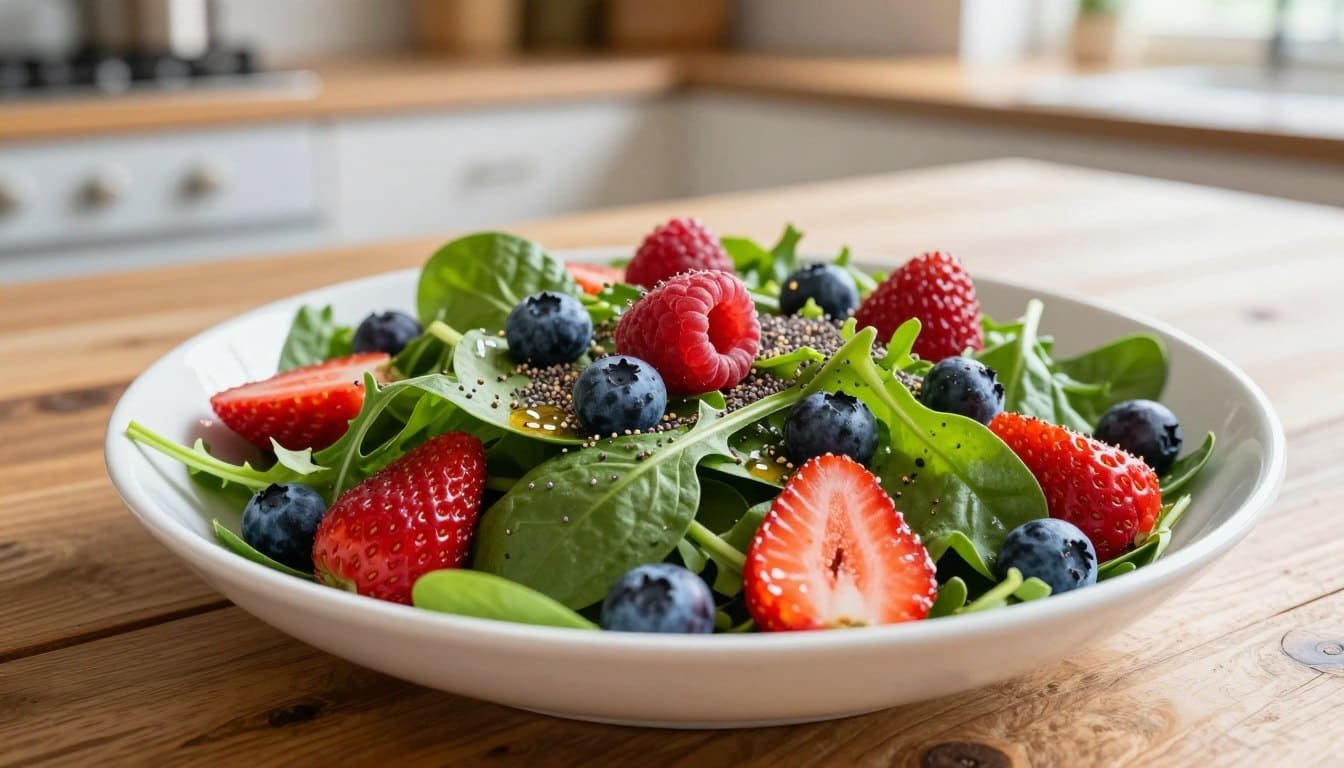
Assemble a dressed salad close to serving so the greens stay crisp. Other options, such as rice or baked potatoes, offer a hearty base that can carry sauce and vegetables.
Choose a recipe to suit the time and the flavor your household wants. Pasta and rice take some attention as they cook, while a salad can come together quickly once the ingredients are ready.
Recipes Chicken: 25 Easy Dinners
- Chicken enchiladas: Roll seasoned chicken and vegetables into tortillas, cover with sauce and cheese, then bake until hot. Use a mild sauce or add heat at the table.
- Chicken Caesar salad: Toss chicken with romaine, Parmesan, and Caesar dressing. Add croutons just before serving so they keep their crunch.
- Chicken pesto pasta: Stir chicken and pesto through cooked pasta, adding a little pasta water to help coat the noodles. Cherry tomatoes or spinach add vegetables with little prep.
- Chicken fried rice: Combine cooked chicken with rice, vegetables, and a savory sauce in a hot pan. Cold, cooked rice separates more easily than freshly steamed rice.
- Buffalo chicken stuffed potatoes: Fill baked potatoes with chicken tossed in Buffalo sauce. Add cheese or a cool topping to balance the heat.
A rice bowl can take on vegetables and sauce, while pasta makes a meal feel substantial without much assembly. Salad brings a fresher option, but its greens are best dressed at the last minute. Choosing the right cut can make any of these ideas easier to cook well.
Which Chicken Cut Suits Each Cooking Method?
The best cut depends on the texture and cooking effort you want. Boneless chicken breast cooks quickly and has a lean texture, while chicken thighs are richer and often more forgiving.
Chicken breast can dry out if overcooked, and bone-in pieces need a doneness check near the bone. A whole bird gives you several portions, but it needs more preparation than individual pieces.
Recipes Chicken: 25 Easy Dinners
Boneless chicken breast and thighs
Boneless breast suits quick skillet meals, air fryer batches, and simple baked dinners. Its thickness matters: a thin end can finish before a thick center, so even pieces help the meal cook more evenly.
Boneless chicken thighs are slightly richer and work well in a skillet, air fryer, or oven. They can be cut into bites or cooked whole, making them easy to use in bowls and other mixed meals.
Bone-in cuts and a whole bird
Bone-in thighs and leg quarters take longer than boneless pieces, but they bring a satisfying texture to roasting and baking. Check the meat close to the bone, where it may take longer to finish.
A whole bird can feed several people and provide cooked chicken for another meal. Spatchcocking flattens it for more even roasting, while leaving it whole takes less prep.
| Cut | Good fit | Useful quality | Watch for |
| Boneless chicken breast | Skillet, air fryer, baking | Quick-cooking, lean meat | Can dry out if overcooked |
| Boneless chicken thighs | Skillet, bowls, roasting | Rich texture, easy to cut | Uneven thickness changes timing |
| Bone-in pieces | Oven roasting, baking | Skin can brown well | Check doneness near the bone |
| Whole bird | Roasting for several people | Multiple portions in one cook | Needs more prep than single cuts |
Once you choose a cut, a thermometer and clean handling help keep the meal juicy and fully cooked.
How Do You Cook Chicken Safely Without Drying It Out?
A food thermometer, not appearance alone, is the dependable way to check chicken doneness. The thickest part should reach 165°F, and the probe should avoid touching bone.
Check the thickest part with a thermometer and look for 165°F. Chicken color can vary, so pinkness or clear juices alone do not reliably show whether the meat is safe to eat.
Check doneness in the thickest part
Place the thermometer into the center of the thickest area. For a breast, that usually means the deepest part; for bone-in pieces, keep the tip away from the bone, which can affect the reading.
Recipes Chicken: 25 Easy Dinners
Let the chicken rest briefly before cutting so the juices have a moment to settle. A short rest also gives you time to finish the vegetables or set out plates, without relying on appearance to confirm doneness.
Keep raw chicken separate
Keep raw poultry apart from ready-to-eat food, and use separate utensils and cutting boards when possible. Wash hands, surfaces, and tools that have touched raw chicken before using them for cooked food.
Do not rinse raw chicken in the sink. Splashes can spread contamination to nearby counters, dishes, and food, while rinsing does not replace proper cooking. A thermometer and careful separation protect both safety and texture.
With safe handling in place, choose a cooking method based on the time you have and how much cleanup you can manage.
Which Cooking Method Fits the Time and Cleanup You Have?
Choose a skillet when you can tend a pan, an air fryer for a small batch, or an oven when a larger meal can cook mostly on its own. The best weeknight recipe is the one that fits your evening, not just the clock.
Air fryer basket space limits batch size, and even a one-pan meal may need a separate side. Use the comparison below to match the cooking method to your attention and cleanup tolerance.
| Method | Best suited to | Hands-on attention | Cleanup consideration |
| Skillet | Small pieces and quick sauces | Frequent checking and turning | One pan, plus any separate side dishes |
| Air fryer | Small batches with crisp surfaces | Check and turn pieces as needed | Basket and tray need washing |
| Oven or sheet pan | Several portions or larger cuts | Less attention while cooking | Pan cleanup, often with a liner |
| Soup or one-pot cooking | Brothy meals and mixed ingredients | Stir and check liquid as it cooks | One pot, with bowls and utensils |
A skillet can be quick but asks you to stay nearby. A sheet pan gives more room for a family-size meal, while a soup pot can hold broth, vegetables, and chicken together. The air fryer cooks a small load well, but working in batches adds time.
Think about what must happen at the same time. A one-pan chicken meal may still need a pot of rice, and an oven dinner may leave you free to make a salad. From method, turn to flavors that can make the same basic ingredients feel different.
What Sauces and Spices Make Weeknight Chicken Taste Different?
Lemon and garlic can turn plain chicken into a bright, savory meal with just a few ingredients. A simple flavor change can make familiar chicken feel new without asking you to learn a different cooking method.
Add sugary sauces near the end of cooking because high heat can scorch them. Adjust heat with more or less spice, and adjust richness with the amount of oil, butter, or cheese.
Bright, savory flavors
Lemon-garlic and Parmesan-herb combinations work with everyday pantry ingredients. Olive oil carries spices across the surface, while fresh herbs or a squeeze of lemon can brighten the dish just before serving.
Creamy, sweet, and spicy flavors
Honey-mustard adds sweetness and tang, while Buffalo sauce brings a sharper heat. Parmesan and herbs offer a savory finish; the table gives you a starting point for each direction.
| Flavor direction | Core ingredients | Works well with | Easy adjustment |
| Lemon-garlic | Lemon, garlic, olive oil | Chicken breast or thighs | Add lemon for more brightness |
| Parmesan-herb | Parmesan, herbs, olive oil | Baked pieces or pasta | Use more herbs for a fresher taste |
| Honey-mustard | Honey, mustard, oil | Oven-baked chicken | Use less honey for less sweetness |
| Buffalo | Hot sauce, butter | Wings, potatoes, or bowls | Add butter to soften the heat |
Match the amount of sauce to the cooking method. A thin coating is easier to manage in a hot pan, while a baked dish can hold more sauce. Sugary blends need late attention to avoid scorching. Turn to sides that balance or complete these flavor choices.
What Sides Turn a Chicken Main Into a Full Dinner?
Serve rice alongside saucy skillet chicken to catch the juices and make the meal more filling. The right side adds balance without creating a second complicated project.
Start longer-cooking sides early, or they can undermine a quick dinner. Roasted potatoes need more oven time than a fast skillet main, while salad and quick-cooking vegetables can come together near the end.
Roasted potatoes pair naturally with baked chicken pieces, and a green salad brings a fresh contrast to creamy dishes. For a spicy chicken dinner, try cooling vegetables or plain rice to soften the heat without hiding the flavor.
Quick-cooking vegetables such as green beans or sliced zucchini suit skillet meals because they can cook while the chicken rests. A creamy casserole can use a crisp salad or a simple green vegetable to keep the plate from feeling too rich.
Choose a side that can share the oven or cook in the time the chicken needs. If you start a long-roasting potato after the chicken is already on the table, dinner loses its easy rhythm. A well-chosen side can also help a small amount of leftover cooked chicken become another meal.
How Can Leftover Chicken Become a Second Dinner?
Turn leftover chicken and rice into a quick fried-rice dinner by warming them with vegetables and a savory sauce. Leftover cooked chicken can make a distinct second meal when you change its base or presentation.
Warm the chicken gently so it does not become dry. Stir it into a hot dish near the end, or heat it with a little broth or sauce to help preserve its texture.
Several simple changes turn cooked chicken into something that does not feel like a repeat. Use a small portion as the protein in a larger dish, then add fresh vegetables or a different seasoning.
- Add chicken to a broth-based soup with vegetables and noodles or rice.
- Fold it into fried rice with vegetables and a little sauce.
- Stuff it into a baked potato with cheese or a cool topping.
- Build a hearty salad with greens, grains, or crunchy vegetables.
- Fill a wrap with chicken, vegetables, and a dressing you like.
For soup or fried rice, stir chicken in late and heat it through without letting it simmer for a long time. For a wrap, chop the meat small enough to distribute it with the fillings.
Keep chicken salad chilled until serving, rather than leaving it on the counter during meal prep. If there are no cooked leftovers available, frozen chicken can still fit a busy night when you handle it safely.
Can You Use Frozen Chicken on a Busy Night?
Frozen chicken can fit a weeknight, but the safe approach depends on whether you thaw it first. Plan around the method you have: some cooks need thawed pieces, while others may allow cooking from frozen.
Never thaw raw chicken on the counter. Refrigerator, cold-water, and microwave thawing are options; chicken thawed in cold water or the microwave should be cooked right away.
Thaw safely when there is time
Thaw chicken in the refrigerator when you have enough lead time. For a faster option, keep it in a leakproof package in cold water, changing the water as needed to keep it cold.
A microwave can thaw chicken when dinner is close, but some areas may begin to warm during the process. Cook chicken thawed this way right away, and follow the appliance instructions for the thaw setting.
Cook from frozen only when the method allows
Some recipes and appliances allow cooking chicken from frozen, but not every cut or method works the same way. Check the appliance or recipe guidance first, since cooking time and results vary by cut and method.
Do not assume a frozen center will cook at the same pace as the outside. Follow the method’s directions and check the thickest part for doneness before serving. Once you have a safe plan, consider which ingredients you can prepare ahead without losing texture.
What Can You Prep Ahead Without Compromising Texture?
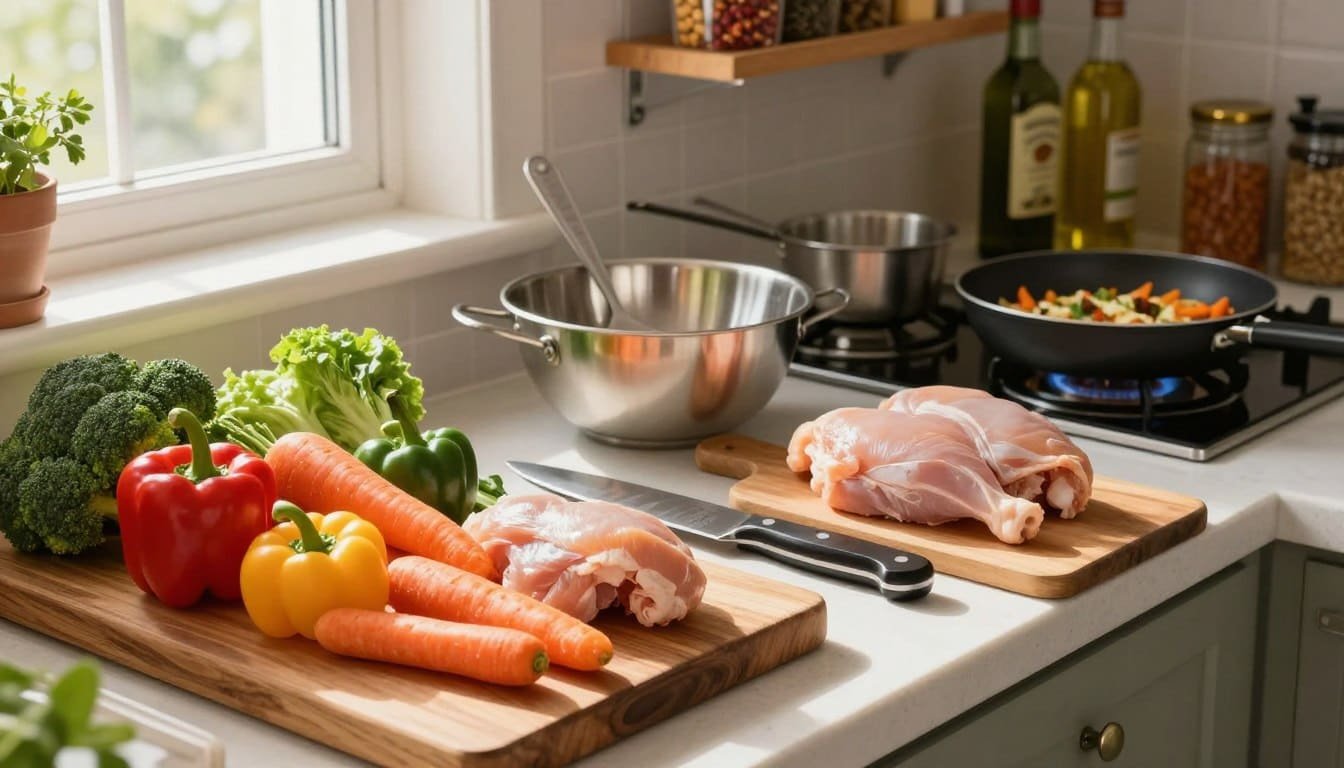
An after-work dinner is easier when the vegetables are cut and the seasonings are ready before cooking starts. A little advance prep can save time without leaving you with softened vegetables or a tired-tasting meal.
Prepare sauces separately and keep raw chicken away from ready-to-eat ingredients. Wash and cut vegetables, measure spices, portion ingredients, and mix a sauce so the cooking steps are ready when you are.
Keep a sauce apart from the chicken until you are ready to cook or serve. This helps crisp coatings stay crisp and gives you control over how much sauce goes into the dish.
Marinate chicken in the refrigerator, not on the counter. Acidic ingredients such as lemon juice or vinegar can change the meat’s texture if they stay in contact too long, so follow the recipe’s timing rather than leaving it indefinitely.
Use a board for raw chicken that will not go straight to salad vegetables or other ready-to-eat food. If you reuse a board, wash it and the knife thoroughly first. With the prep set, you can adapt the finished dinner to different household preferences.
How Can You Adapt Dinner for Different Family Preferences?
If some family members want spicy chicken while others prefer a mild meal, keep the base mild and add stronger flavors at the table. That gives everyone a choice without requiring separate dinners.
Keep toppings separate, and check packaged ingredients for allergens. A shared dish is not safe for someone with an allergy if an allergen has already touched it, even when you remove the topping afterward.
Keep the base mild and add flavor at the table
Serve hot sauce, herbs, or extra spices on the side so each person can season a portion. Offer cheese separately, too, rather than mixing it into a dish that someone may need to avoid.
A flexible rice bowl can start with plain rice, chicken, and vegetables, with spicy sauce or cheese added to individual bowls. A baked potato works the same way: set out chicken, vegetables, and toppings, then let diners build their own.
Offer flexible sides and toppings
For a salad dinner, put greens, chicken, cheese, and crunchy toppings in separate bowls. Each person can choose what belongs on the plate, and greens stay crisp until they are dressed.
Read ingredient labels on packaged sauces and toppings, especially when a family member has an allergy. Keep utensils from one topping out of other bowls, and do not treat removing a topping as a fix after it has touched shared food.
Separate portions can make one dinner work for different tastes. After the meal, refrigerate any remaining portions safely rather than leaving them out while the kitchen is cleaned.
How Long Can Cooked Chicken Leftovers Stay Safe?
Refrigerate cooked chicken leftovers promptly instead of leaving them out while you clean the kitchen. Refrigerate within two hours, or within one hour when the temperature is above 90°F.
Use airtight, shallow containers so food cools more quickly. Discard cooked food left at room temperature beyond the safe window, even if it looks and smells fine.
Refrigerate cooked chicken leftovers within two hours, or within one hour when the temperature is above 90°F. Discard food left out longer.
Cooked chicken pieces generally keep for 3-4 days in the refrigerator and are best used within 2-6 months in the freezer for quality. Soups and casseroles have their own freezer quality window.
| Leftover type | Refrigerator | Freezer for best quality | Reheating approach |
| Cooked chicken pieces | 3-4 days | 2-6 months | Heat until steaming hot throughout |
| Chicken soup or stew | 3-4 days | 2-3 months | Stir while heating until steaming hot |
| Chicken casserole | 3-4 days | 2-3 months | Heat until steaming hot throughout |
Use shallow containers for soup and casserole as well as for chicken pieces, and seal them tightly. Reheat only the portion you plan to eat, stirring soup or stew so it warms evenly.
Choose one recipe idea, check what is already in your kitchen, and make a practical plan for your next dinner.
Conclusion
There is no single best chicken dinner for every busy night, only a good match for that evening. The right meal fits the time you have, the cut you prefer, and how much cleanup you can manage.
Choose one recipe, check the ingredients already at home, and add only what is missing to your shopping list. That small step turns a dinner idea into a plan you can use. Pick one meal for the coming week and make it your next easy dinner.
FAQ
How much chicken should I plan per person for dinner?
Plan about 4 ounces of cooked boneless chicken per adult as a starting portion. Increase or reduce that amount based on appetite and the sides you are serving. Rice, potatoes, and vegetables can make a plate more filling, while a chicken salad or a lighter meal may call for a smaller portion. Children’s appetites vary, so use the adult portion as a guide rather than a strict rule.
Can I cook chicken straight from frozen in an air fryer?
Sometimes, but it depends on the cut and the air fryer. Check the appliance manual or a reliable recipe for directions, and allow extra cooking time compared with thawed chicken. Pieces stuck together may cook unevenly, so separate them if the instructions allow. Use a food thermometer in the thickest part and confirm it reaches 165°F before serving.
Can I swap chicken thighs for chicken breast in a recipe?
Usually, yes, but do not rely on the breast’s timing when you switch cuts. Thickness, bone, and the cooking method affect how quickly the meat cooks. Boneless thighs may fit a recipe more closely than bone-in thighs, which take longer. Check the thickest part of each piece and adjust the cooking time so the chicken is fully cooked.
How do I keep chicken breast from drying out in a skillet?
Use even-thickness pieces, avoid overcooking them, and check the thickest part with a food thermometer. If one end is much thinner, it can dry out while the center finishes. Pound or slice the breast to a more even thickness before cooking, and remove it from the heat once it reaches 165°F. Let it rest briefly before cutting.
Is rotisserie chicken a good shortcut for weeknight dinners?
Yes, rotisserie chicken is a useful shortcut when you need cooked meat without starting from raw pieces. Shred it for soup or casserole, or add it to salad and wraps. Since it is already cooked, warm it gently in hot dishes so it does not dry out. Refrigerate portions you do not use promptly after dinner.
Can I marinate chicken overnight?
Yes, you can marinate chicken overnight if you keep it in the refrigerator. Take care with acidic marinades made with lemon juice or vinegar, since prolonged contact can change the meat’s texture. Use a food-safe container or sealed bag, and do not reuse marinade that touched raw chicken unless you cook it thoroughly. Follow the recipe’s suggested timing when available.